
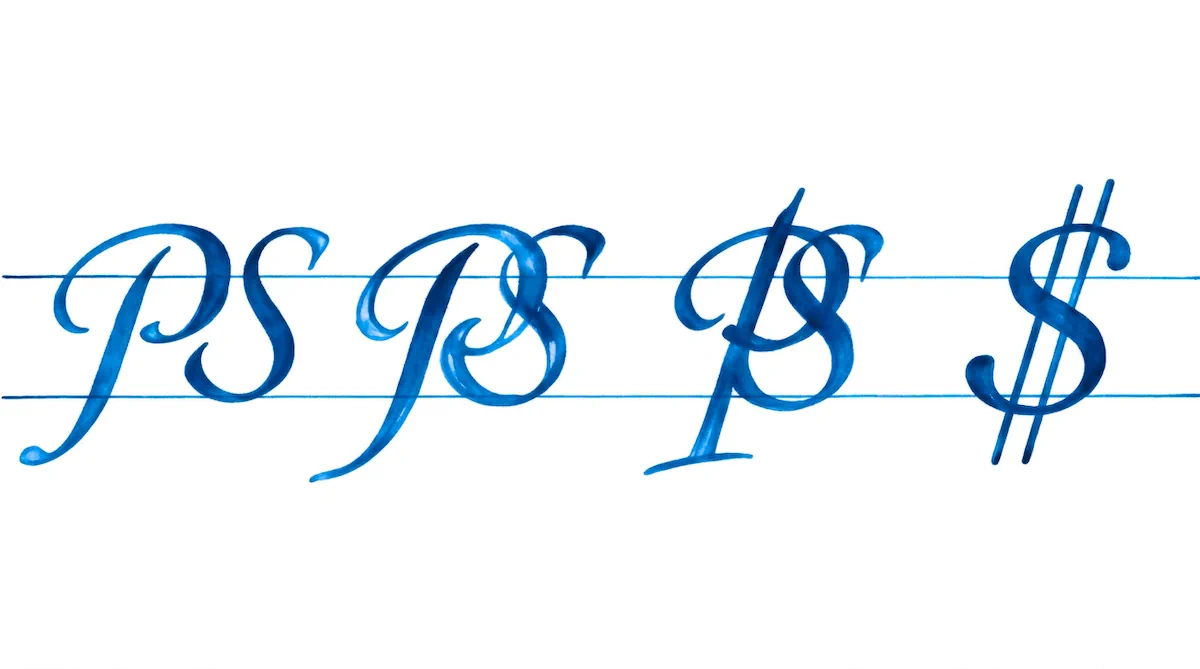
Loanwords are borrowed across languages, but did you know that this borrowing can happen with more than just words? The dollar sign ($), widely considered one of the most recognizable American symbols in the world, did not actually come from the United States. In fact, this symbol has a long and complex history tracing back to Latin American coins. Sprawling Spanish commerce (thanks to silver mines) connected the region with foreign merchants, and from these connections, the dollar sign was gradually born.
The Origins of the Dollar Sign
From the Spanish pieces of eight to the young United States defining its dollar by the Spanish coin’s weight and value, the $ sign stood for the Spanish peso before it ever stood for the US dollar. Looking more closely at how pesos influenced the world, in tandem with how language changes over time, can reveal how a foreign symbol could become so iconically tied to the United States and its economic power worldwide.
Pieces of Eight
For centuries, the Spanish empire’s mercantile might was known mainly through its large silver coins, worth eight reales. In Spanish, these coins were called the real de a ocho or peso de ocho; in English, they were known as a “piece of eight” or a “Spanish dollar.”
The piece of eight is widely considered to be the world’s first global currency. By using it, merchants avoided the suspicions that came with accepting unfamiliar, local coins, which could contain varying amounts of precious metal (which might make the coin worth less than claimed). People trusted pieces of eight and knew what they were getting. This trust made silver from Spain’s American mines a center of world commerce, as it was minted into pieces of eight that traveled worldwide.
In fact, some coins bear physical marks of their journey around the world. Coins that reached China would sometimes be scored or stamped by merchants who tested them to ensure they were the silver they expected. Surviving coins can still be seen bearing these marks.
By the time the United States was founded, the Mexican eight-real coin was already among the most widely used pieces of currency in the world. The fledgling US was not born into a world craving US currency. That need was already fulfilled, and it was the United States that would be yet another beneficiary of Spanish-American money.
The Spanish Dollar
In the early North American British colonies, pieces of eight were everyday money. They, alongside British coinage (which was in increasingly short supply), formed a mixture that settlers used regularly. However, given that the new nation had just broken away from British rule, it may come as no surprise that the US decided to give its own money a name other than the pound: the dollar.
The word “dollar” came from European names for large silver coins (e.g., the German “thaler”), and the Spanish-American piece of eight was by far the most frequently found in American hands. Thus, Spanish silver became synonymous with the dollar.
Pesos to Dollar Signs
Although we have a clear picture of how Spanish silver edged its way into the United States’ primary form of currency, details on how the $ symbol arose are less clear. Historians have proposed several theories.
The first, and most likely, is that the abbreviation for pesos prompted the development. When doing their accounting, merchants did not want to write out the full word, “pesos,” on every line, in the same way that you’re likely to write 20c instead of 20 cents. The standard abbreviation for pesos was ps. In handwritten documents, those letters tended to be close together or even overlap slightly, and over time, a line from the “p” was vertically intersecting the “s.”
Other theories suggest that the Spanish coins, which depict the Pillars of Hercules, could have been the source. The Smithsonian notes that those pillars** **could have prompted the vertical strokes within the dollar sign.
No matter where the $ symbol came from, it did not appear out of nowhere in the United States as a specific symbol for the American dollar. The Spanish piece of eight drove American commerce early on, and just as Americans might borrow words from other languages, they can borrow symbols, too.
