How to Work in the U.S. As a Foreign-Educated Radiologic Technologist
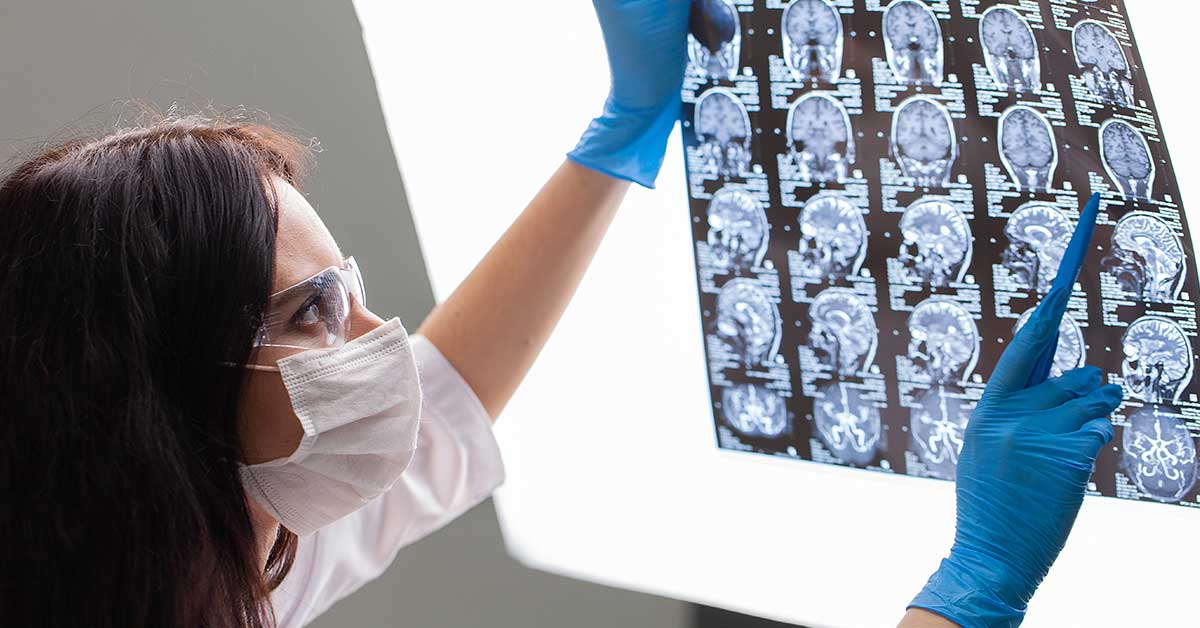
Radiologic technologists go by many names, such as radiographers, X-ray technicians, and rad-techs. But no matter what they’re called, all radiographers must meet specific requirements to work in the United States.
The good news is that many states are open to licensing radiologic technologists from other countries, as long as you meet two main guidelines. First, you’ll need an associate degree or its equivalent. Second, you’ll need to pass a national certification exam.
While these guidelines are relatively simple, hopeful rad-techs can sometimes face challenges along the way. There could be moments when you feel tempted to take a job outside your field of expertise just to pay the bills. But then you wouldn’t use the education and skills you’ve worked hard to develop. Luckily, getting your foreign credentials recognized so you can start working as a radiologic technologist in the U.S. while making great money is absolutely possible. In this article, we’ll walk you through the steps needed to get your license.
Why Become a Radiologic Technologist in the U.S.?
Career Opportunities and Work Environments

Radiologic technologists are in high demand across the U.S. with strong earning potential and career growth.
You might be asking yourself if getting licensed as a radiologic technologist in the United States is genuinely worth your time, and the answer is yes.
A career as a radiologic technologist offers excellent opportunities in various workplaces such as hospitals, urgent care centers, dental offices, and private physician practices.
Job Demand and Salary Expectations
Radiologic technologists are in demand across the country. The U.S. Bureau of Labor Statistics projects a 6% job growth from 2023 to 2033, with about 16,000 openings each year.
According to Indeed.com, you’ll also earn well:
- California: $42/hour ($87,000/year)
- New York: $46/hour ($95,000/year)
Then, as you progress in your career, there’s potential for higher earnings. Specializing in areas like magnetic resonance imaging (MRI), computed tomography (CT), or mammography, or advancing into roles like lead radiologic technologist, can increase your earning potential even more.
So, now that you know the opportunities and earning potential, let’s examine the next steps to get you started.
Licensing Process Overview
Who Grants Your License?

American Society of Radiologic Technologists (ASRT) & American Registry of Radiologic Technologists (ARRT).
One of your first steps is determining which authority will grant your radiologic technologist license.
Radiologic technologists perform essential imaging procedures like X-rays or CT scans, which involve carefully handling radiation. Radiation is a powerful tool but comes with risks if not managed properly. That’s why radiologic technologists must undergo a rigorous certification process that prepares them to protect their patients and themselves before they’re licensed to practice.
As you research the field of radiology in the United States, you’ll find national organizations that support technologists, like the American Society of Radiologic Technologists, also known as the ASRT, and the American Registry of Radiologic Technologists, known as the ARRT. Of course, these organizations provide resources and guidance, but your state’s licensing board will award your license itself.
For example, if you want to work in Texas, you would be licensed by the Texas Medical Board, while in New York, you’d be licensed by the New York Department of Health.
One of the best ways to find your state licensing board is to use the ASRT directory. There, you’ll find an extensive list of all the licensing boards in the United States.
We’ll also provide contact information for licensing boards in popular states like California, Florida, Illinois, Massachusetts, New Jersey, New York, and Texas. These seven states are among the most popular for people moving to the United States to start new careers.
How to Contact Your State Licensing Board
To begin with, if English is not your first language, you might consider writing your email or letter in your native language and then translating it for clarity. We can help with professional translations to ensure your message is clear.
In your letter or email, include as much detail as possible. To ensure the state board can easily get back to you, you should provide your full name, phone number, mailing address, and email address.
If you prefer to call the licensing board, remember that office hours are typically from 9 a.m. to 5 p.m., Monday through Frid,ay and that the U.S. has several different time zones.
Credential Evaluation

Foreign-trained radiologic technologists must have their credentials professionally evaluated to meet U.S. standards.
As a radiologic technologist educated in another country, you will need your foreign credentials evaluated by a professional service.
According to the ARRT, you’ll need at least an associate degree to sit for their national exam. This requirement is key because most states require you to pass the ARRT exam to get licensed, which we’ll discuss later.
The most common degree for radiologic technologists is an Associate of Applied Science in Radiologic Technology. However, you might notice that your degree has a different name or involves coursework unique to your country. That’s why ARRT requires a credential evaluation if you were educated outside the U.S.
What Is Credential Evaluation?
Credential evaluation services review your academic and professional qualifications and convert them into a format recognized by the U.S. healthcare system.
Fortunately, the ARRT will allow foreign-trained technologists to take their exam if they follow specific guidelines. One of these guidelines is that any degrees from schools outside of the U.S. you’re submitting to meet the educational requirements must be evaluated by an approved credential evaluation service.
Recommended Services and Costs
Foreign degrees must be evaluated by an approved service. The evaluation agency must be a member of:
These organizations don’t provide evaluations themselves, but they ensure that the evaluation services they support are reputable. Each organization includes many approved evaluation services, so you should be able to find one that fits your timeline and budget.
The ARRT recommends choosing the most in-depth type of evaluation available, often called a “comprehensive” or “subject analysis” evaluation. These evaluations generally cost between $200 and $400. The processing time varies, from a few days to about four weeks, but many services offer expedited options for an extra fee of $80 to $150.
Required Documents
To use a credential evaluation service, you’ll need to gather a few important documents, including your original degree certificate or diploma, transcripts, and marksheets. If any of these documents are in a language other than English, the ARRT says that “Transcripts in foreign languages will need to have an English language translation submitted for acceptance.”
Certified Translations
Why You Need Them
If your academic or professional documents are in a language other than English, you’ll need certified translations to ensure they’re accepted by U.S. credential evaluation services, licensing boards, and exam administrators. Even if you’re fluent in English, you’re not allowed to translate your own documents. Certified translations must be completed by a professional translator or a reputable translation service that can provide a signed certificate of accuracy. This document confirms that the translation is a true and complete representation of the original, which is essential for official use in the United States.
What They Do
It’s also important to understand that certified translations do not assess or convert the value of your academic grades or degrees. They simply render your documents into English so the evaluation agency can determine how your qualifications align with U.S. standards. If you earned a grade of “10” in a system where grades go from 1 to 10, for instance, the translation will show that exact score—not attempt to equate it to an “A” or other U.S. grade. Alongside your transcripts and diplomas, you may also want to translate recommendation letters, course descriptions, or professional certificates to help with job applications or further education down the line. A trusted translation partner ensures your documentation is accurate, professional, and ready for review.
Order Your Certified Translation
Get a free quote
Proving English Proficiency

Essential English Proficiency for Dentists – TOEFL and IELTS
Why English Skills Are Important
If you’re planning to start a career as a radiologic technologist in the U.S., you must have strong English skills.
Strong English skills are crucial for communicating with patients about their procedures, collaborating with doctors and nurses, or documenting imaging results.
For one thing, the ARRT exam, which we discussed earlier, is only administered in English. This means you must be comfortable reading and understanding medical terminology, exam questions, and instructions.
Once you’ve started working, excellent English skills are equally important. You’ll need to guide patients through movements when using the CT scanner or X-ray machine. You might have to say things like, ‘Turn your body to the left’ or ‘Raise your arm above your head.’
In addition to using your English at work, you’ll need it to complete coursework and maintain your license every couple of years.
Because of this, many employers expect radiologic technologists to be excellent English speakers, readers, and writers. One of the best ways to demonstrate your language skills is by passing an English proficiency exam.
Recommended English Exams
Two of the most widely recognized exams are the TOEFL, which stands for Test of English as a Foreign Language, and the IELTS which means International English Language Testing System. These exams can prove you have the English skills needed to succeed in the profession and if you have a certificate from either organization it will probably help you find a job more quickly after you’re licensed.
The ARRT Certification Exam
The most common exam to become a radiology technician is the American Registry of Radiologic Technologists or ARRT Certification Exam.
All hopeful radiologic technologists must pass the American Registry of Radiologic Technologists or ARRT exam, which is sometimes called the “ARRT registry” by radiology professionals. If you want to dive deeper into specific questions about the exam, you can check out the ARRT exam online handbook. But for now, let’s cover the most important information.
The ARRT creates and oversees the exam and has partnered with Pearson VUE to administer it. The test will be given at one of Pearson VUE’s testing locations, which are spread across the U.S. and overseas.

Primary Eligibility Pathway Handbook.
Application Process and Timeline
To schedule the exam, you’ll create an online account with the ARRT to apply for certification and pay the $225 fee. After applying, you’ll get a Candidate Status Report. This report will include your assigned testing window, which is 90 days from when your application is processed, meaning you have a 90-day period to take the exam.
Once that’s done, you’ll need to set up a Pearson VUE account. It can take up to 24 hours for this account to activate, and you’ll get an email when it’s ready. As you’re setting up the account, make sure you have your Candidate Status Report and ARRT ID handy, and then you’ll be all set to schedule your exam online.
After you schedule your exam, Pearson VUE will send an email confirmation listing your appointment date and time and the address, phone number, and directions to your Pearson VUE test center. Pearson VUE centers are usually open Monday through Friday from 8 a.m. to 6 p.m., and some offer evening or weekend hours. When you arrive to take your exam, you’ll need to verify your name and home address and provide your exam discipline, “Radiology.” You must also provide your ARRT ID number from your Candidate Status Report.
Exam Structure and Content
This exam is computer-based, and you’ll take it using one of Pearson VUE’s company computers. You’ll have to answer 200 scored questions, along with an additional 30 pilot questions. These pilot questions are included to help create future exams, but they aren’t identified when you’re testing, and your answers to these will not affect your score.
The exam has 4 sections and a total of 200 questions. These questions are presented in a random order to allow test-takers to prove they have a well-rounded understanding of the material without depending on any specific context.
- Patient Care: 33 questions
- Safety: 50 questions
- Image Production: 51 questions
- Procedures: 66 questions
Most of the questions you’ll answer are multiple-choice with one best answer, though some may require you to arrange options in a specific order. There might also be questions where you choose an answer based on images or a short video clip.
The total time you’ll spend at your exam appointment is about 4 hours and 10 minutes, or 250 minutes, which includes various components. You’ll start with an 8-minute tutorial, followed by a 2-minute nondisclosure agreement, then the main exam, which includes 230 total questions, combining the scored and pilot items. Finally, you’ll have a 10-minute survey at the end. You’ll have about one minute per question if you answer every question.
Scoring and Retakes
The exam is scored on a scale from 1 to 99, and you’ll need a score of 75 to pass. This doesn’t mean you must answer 75% of the questions correctly. Because of the exam’s scaled-scoring method, the exact number of correct answers needed to reach a score of 75 can change depending on your test version. For versions of the test that the computer determines to be easier, you might need to answer more questions correctly to reach a score of 75. Meanwhile, on more difficult versions of the exam, fewer correct answers might be enough for you to get a score of 75.
After you complete the exam, you’ll receive a preliminary, scaled score at the testing center, though this is not your official score. Within four weeks, you’ll receive an Examination Results Packet by mail containing your official score report and your certification and registration results. Your score report will show your overall score and give you a performance breakdown by content area. The certification results should explain that you’re officially entered into the ARRT’s “Verify Credentials” online database, one of the easiest ways to show state licensing boards and potential employers you’ve passed the exam.
If you don’t pass on your first attempt, you’ll still have two more chances since ARRT allows you three exam attempts from the time they determine you’re eligible. It’s worth noting that all three attempts must be completed within three years from opening your first testing window. Also, each time you retake the exam, you must reapply through your ARRT online account and pay the $225 fee again.
Study Materials and Resources
The best way to avoid retaking the exam and paying the fee twice is to pass the first time by preparing. The best place to begin studying is with the ARRT’s official radiography content specifications, which provide a thorough list of every topic your exam will cover. Even though the exam is divided into 4 broad categories, as we mentioned earlier, the content specifications PDF details hundreds of topics you’ll need to master.
We should mention that the ARRT does not officially endorse any study guides, but plenty of resources are recommended by radiography students.
The following is a list of some of the most popular study resources.
- Mosby’s Comprehensive Review of Radiography: A popular exam guide with content-aligned sections, practice questions, three full mock exams, and 1,400 online review questions.

Mosby’s Comprehensive Review of Radiography
2. Lange Q&A Radiography Examination: A highly rated book with two printed and one online practice exam, featuring detailed illustrations similar to the ARRT test.

Lange Q&A Radiography Examination
3. RadTechBootCamp: An online platform offering 20 video-based radiography courses, unlimited mock exams, and quizzes for targeted review.

RadTechBootCamp
4. Prepry: A mobile app for iOS and Android with flashcards, quizzes, and smart learning tools to improve weak areas before the ARRT exam.

Prepry
5. Facebook Radiography Prep Group: – A private, ad-free community with nearly 7,000 members who share advice, resources, and quick responses to study questions.

Facebook Radiography Prep Group
6. Reddit: r/radiography: A smaller but active subreddit where aspiring and current rad techs share experiences, tips, and encouragement.

Reddit: r/radiography
Alternative Exam – NMTCB(RS)
What Is the NMTCB(RS)?
Besides the ARRT, you may see the Nuclear Medicine Technology Certification Board’s Radiation Safety exam.
Accepted only in some states, the NMTCB(RS) has:
- 200 questions
- 3.5-hour limit
- $225 fee
- One attempt/year
Should You Take This Exam?
You might want to check out the NMTCB’s exam content outline and testing locations for further information. The best thing you can do is check with the state licensing board where you hope to work to ask which national exam they prefer.
State-Specific Licensing Requirements
Here’s a quick overview of how to apply for licensure in some of the most popular states for foreign-trained radiologic technologists, we’ll go into more detail below.
| State | Application | Application Fee | Exam |
| CA | Mail-in | $112 | ARRT |
| FL | Online/mail | $50 | ARRT/NMTCB(RS) |
| IL | Email/fax | $120 | ARRT/NMTCB(RS) |
| MA | Online portal | $150 | ARRT/NMTCB(RS) |
| NJ | Mail, notarized | $60 | ARRT |
| NY | $120 | ARRT/NMTCB(RS) | |
| TX | Online portal | $85.25+$34 | ARRT + TX Jurisprudence |
California
For example, if you’re in California, you must print and fill out the Radiologic Technology Certificate Application. Then, you’ll physically mail it along with documentation that you passed the ARRT exam and a $112 application fee, which has to be a check or money order payable to ‘CDPH-RHB.’

State-Specific Licensing Requirements in California
Florida
In Florida, you can apply either online through the Florida Department of Health’s online services or by mail. You’ll need to submit proof that you’ve passed the ARRT or NMTCB(RS) exam, a $50 application fee, and a detailed Background History Report.

State-Specific Licensing Requirements in Florida
Illinois
If you’re applying in Illinois, you’ll go through the Illinois Emergency Management Agency, or IEMA, for accreditation. The name might seem surprising, but that’s because they handle radiation safety and regulation in the state. They prefer you email or fax your application, indicating which national organization you’re certified by, such as the ARRT or NMTCB(RS), along with your certificate number. Once processed, you’ll receive an email with login instructions to pay the $120 fee by credit card.

State-Specific Licensing Requirements in Illinois
Massachusetts
When applying in Massachusetts, you must create an account with the Environmental Health eLicensing Portal. This is where you can upload your ARRT or NMTCB(RS) certification and pay the $150 fee. Luckily, if it’s your first time using the Massachusetts online licensing portal, they’ve created an instructional video for first-time users.

State-Specific Licensing Requirements in Massachusetts
New Jersey
Folks applying in New Jersey will have to print and fill out the application and then have it notarized by a notary public. After that, you’ll need to write a personal check or money order, made payable to “Treasurer, State of New Jersey,” to cover the $60 application fee. Then, you’ll need to mail your application, payment, and ARRT certificate to the Department of Environmental Protection.

State-Specific Licensing Requirements in New Jersey
New York
To apply in New York, you’ll need to print and fill out your application, include proof that you’ve passed the ARRT or NMTCB(RS) exam, and include a check or money order for $120 made out to the New York State Department of Health to cover the application fee. Once you’ve gathered all these documents, mail them to the New York State Department of Health.

State-Specific Licensing Requirements in New York
Texas
Finally, if you’re applying in Texas, you’ll log in to the Texas Medical Board’s online portal to complete your application. The $85.25 application fee must be paid online by credit card or electronic check. In the portal, you’ll also submit proof that you’ve passed the ARRT exam. Although the official application is online, the Texas Medical Board offers a sample application worth reviewing. Besides the ARRT exam, you’ll also need to pass the Texas Jurisprudence Exam, which is available with a study guide and practice exam in your My TMB account. You’ll need a score of 75 or higher to pass, and you have unlimited attempts. Each attempt costs $34.

State-Specific Licensing Requirements in Texas
Maintaining Your License
Renewal Period and Requirements by State

After receiving your license, you’ll need to maintain it throughout your career.
In most states, Radiologic Technologists must renew their license every two to three years. Each state has slightly different requirements, but typically, you’ll need to complete some continuing education courses and pay a renewal fee.
Next, we’ll cover what you must do to keep your license up-to-date in seven popular states for immigrants moving to the U.S. Even if you plan to work in a different state, these examples should give you a sense of what to expect, since the requirements are similar in most states.
Let’s start with California. Radiologic Technologists must earn 24 approved continuing education credits, 4 of which are focused on digital radiography. These courses must be completed within two years before the permit expires. California only accepts credits approved by the ARRT, and the renewal fee is $104 every two years.
In Florida, Radiologic Technologists are required to complete 13 continuing education credits every 2 years and pay a fee of $55. This includes 12 credits in general coursework and 1 additional credit focused on HIV and AIDS. The Florida Department of Health provides a list of approved course providers, so finding one to meet your needs should be simple.
To renew your license in Illinois, you’ll need 24 credits of continuing education every 2 years. To see the exact fee to renew your license, you’ll have to log in to the IEMA’s accreditation system with your Social Security number, accreditation number, and birth date.
Massachusetts requires radiologic technologists to renew their licenses online every 2 years and pay a fee of $150. To do this, they need 24 continuing education units, and the Massachusetts Department of Public Health provides a list of approved agencies for these courses. Radiologic technologists will also need a copy of their ARRT verification on letterhead or N.M.T.C.B. certification, which can be verified online.
To renew your license in New Jersey, keep your license number handy because you’ll need it to log in to the state’s online renewal system. The renewal fee is $90, and licenses need to be renewed by October 1st every even-numbered year, like 2026 or 2028. If you got your license in an odd-numbered year, you’ll need to renew it on October 1st of the next even-numbered year, even if you haven’t had it for a full two years. However, after that, you’ll be on the same schedule as everyone else, with renewals every two years. And unlike many other states, New Jersey does not require continuing education courses to renew your license.
As for New York, its Department of Health doesn’t explicitly state its continuing education requirements. Instead, the state expects radiologic technologists to maintain an ARRT or NMTCB certification, which will cover the continuing education. Your license will need to be renewed every 4 years for a fee of $80, and to get the renewal application, you’ll need to call the DOH’s phone number.
Finally, in Texas, Radiologic Technologists must renew their licenses every 2 years by taking 24 continuing education credits. As a part of the continuing education credits, you’ll need to complete an approved course in human trafficking prevention. You can renew your license online, and the fee will be $71.25.
Below is a summary of license renewal requirements in key states, including continuing education and renewal fees.
| State | CE Hours | Renewal Frequency | License Renewal Fee |
| CA | 24 (including 4 in digital radiography) | Every 2 years | $104 |
| FL | 13 (including 1 credit on HIV/Aids) | Every 2 years | $55 |
| IL | 24 | Every 2 years | Varies (see IEMA) |
| MA | 24 | Every 2 years | $150 |
| NJ | None | Every 2 years | $90 |
| NY | Must maintain ARRT or NMTCB certification | Every 4 years | $80 |
| TX | 24 (including human trafficking course) | Every 2 years | $71.25 |
Final Thoughts and Next Steps for Your U.S. Radiologic Technology Career
That brings us to the end of our overview of the licensure process for radiologic technologists in some popular states for immigrants in the U.S. Many states follow similar standards, so the information we’ve covered should give you a solid understanding of what to expect across the country.
Radiologic technologists are in high demand across the U.S., and foreign-trained professionals are welcome. With the right steps—credential evaluation, language proficiency, passing the ARRT exam, and obtaining state licensure—you’ll be on your way to a rewarding career.
While the credentialing process may have challenges, it’s a path worth taking. With your skills, you’ll find many opportunities to advance in specialized areas, step into leadership roles, or even teach and mentor the next generation of radiologic professionals.
Wherever you’re coming from, moving to the United States often requires certified translations of essential documents. You may need translations for your college transcripts, marriage certificates, birth certificates, or previous radiologic technology qualifications. Feel free to contact us, and we’ll ensure you have all the translations needed to start your new journey!
U.S. Language Services is not a law firm; its content should not be taken as legal advice. For specific legal concerns, please consult a licensed attorney. Similarly, financial information on our site is for informational purposes only, not financial advice. Consult a certified financial advisor or tax professional for advice tailored to your situation.
By accessing U.S. Language Services, you acknowledge that it does not provide legal or financial advice. You agree not to rely on its content as such. U.S. Language Services and its contributors bear no liability for any inaccuracies, losses, or damages resulting from the use of information on our site.

Guaranteed Acceptance
All our certified to English translations are accepted by the USCIS. Our translations follow the guidelines established by the USCIS and are also accepted by educational institutions.
Most Requested Documents
FAQs
You can order most translations 24 hours a day, 7 days a week through our online store. For large projects (more than 20,000 words or 50 pages), please request a quote.
General Questions
Certified Translation
Standard Translation

American Translators Association
Corporate Member: M-101886
Get a free quote
Please provide us with your contact information and upload your documents. All the information transmitted is secure.